
Why Airports Run Therapy Dog Programs
Flying is stressful. Long lines, crowded gates, delayed flights, and unfamiliar environments push many travelers toward anxiety before they ever board a plane. Airports across the country recognized this problem years ago and found one of the most effective solutions imaginable: trained therapy dogs walking the terminals.
Programs like the Wag Brigade at San Francisco International Airport and the Canine Airport Therapy Squad at Los Angeles International Airport have become models for the industry. Travelers stop mid-stride to pet a calm, certified dog, and something shifts. Heart rates drop. Smiles appear. Children who were melting down calm down instantly.
For handlers, airport therapy dog programs represent some of the most rewarding volunteer work available. The foot traffic is enormous, the impact is immediate, and the variety of people you meet in a single shift is unlike anything a clinic or school visit can offer.
How Terminal Comfort Programs Are Structured
Most airport therapy dog programs are managed as formal volunteer partnerships between the airport authority and a local affiliate chapter of a nationally recognized therapy dog organization. The airport sets the rules for access. The therapy dog organization certifies the teams and maintains training standards.
Volunteers typically commit to regular shifts, often two to four hours, walking assigned terminal routes or stationed near high-stress checkpoints like security lines and gate clusters. Some programs use vests and ID badges for both handler and dog. Others use distinctive leash wraps or bandanas so travelers can spot the team immediately.
Shift frequency varies by program. Some airports ask for a minimum of two visits per month. Others are more flexible and allow handlers to sign up as schedules permit. Either way, consistency matters. Airports need reliable coverage, especially during peak travel periods like holidays and summer months.
Program coordinators handle scheduling, track visit hours, and communicate policy updates. Handlers report to the coordinator, not to airport staff directly. That chain of accountability is an important part of how programs maintain quality and safety across a large, public environment.
Certification Standards Organizations Require
Airport programs do not certify therapy dog teams themselves. They rely on certification from established national organizations, and they are specific about which ones they accept. The three most commonly recognized are Pet Partners, Therapy Dogs International (TDI) and the AKC Therapy Dog program.
Pet Partners
Pet Partners uses a standardized evaluation called the Therapy Animal Aptitude and Reliability Test. It assesses the animal's behavior, the handler's skill and the team's ability to work together in unpredictable environments. Handlers must also complete an online course before testing. Pet Partners evaluations must be renewed every two years.
Therapy Dogs International (TDI)
TDI certification requires dogs to pass the AKC Canine Good Citizen test as a foundation and then complete additional temperament assessments specific to therapy work. TDI evaluators observe how dogs respond to strangers, medical equipment, unexpected sounds and crowded conditions. Airport environments specifically benefit from this type of stress-tested evaluation.
AKC Therapy Dog Program
The AKC Therapy Dog program recognizes teams that have completed visits through an AKC-approved therapy dog organization. Dogs earn titles based on the number of documented visits completed, starting with the AKC Therapy Dog Novice title (THDN) at 10 visits and progressing through Advanced and Distinguished levels. The program rewards sustained commitment rather than testing alone.
Before pursuing any of these pathways, your dog should have a solid foundation in basic obedience and socialization. Our guide on therapy dog training basics covers the skills evaluators look for and how to build them systematically before your first evaluation.
It is also worth understanding the broader landscape of animal-assisted work. The difference between therapy dogs and service dogs is a question airport staff and travelers ask handlers constantly, and knowing how to answer it clearly is part of being a good ambassador for the work.
The Application and Screening Process
Getting into an airport therapy dog program involves more steps than most people expect. That is intentional. Airports are high-security, high-traffic public environments. Program coordinators have to be selective about the teams they bring in.
Step 1: Earn Certification First
No airport program will consider an uncertified team. Complete your certification through Pet Partners, TDI or an AKC-approved organization before contacting any airport program. Keep all documentation current and ready to submit.
Step 2: Find the Right Program
Search the websites of major airports in your region for volunteer or therapy animal program pages. Many programs are listed under volunteer services or community partnerships. If you cannot find information online, call the airport's public affairs or volunteer coordination office directly.
Step 3: Submit Your Application
Applications typically ask for handler contact information, your dog's breed and age, certification organization and expiration date, veterinary health records, vaccination documentation and proof of liability insurance. Some programs require handlers to carry their own liability coverage in addition to what the certifying organization provides.
Step 4: Complete Airport-Specific Orientation
Most programs require new handlers to complete an orientation specific to that airport. This covers security protocols, restricted areas, how to interact with travelers appropriately, how to respond to medical emergencies and what to do if your dog becomes stressed or unwell during a shift. Some airports issue handler ID badges that require a background check.
Step 5: Shadow an Experienced Team
Many programs pair new handlers with experienced volunteers for at least one or two shadow shifts before allowing them to work independently. This gives new handlers a chance to learn the layout, observe best practices and ask questions in a low-pressure setting.
The screening process for therapy dog work in general follows a similar logic: evaluation, documentation, supervised experience and then independent deployment. Airport programs simply add a layer of institutional protocol on top of the standard certification process.
What a Real Shift Looks Like
Picture this. You arrive at the airport employee entrance, badge in hand. Your dog is in a clean therapy dog vest, freshly groomed, calm and ready. You check in with the volunteer coordinator, pick up your sign-in sheet and head into the terminal.
The first interaction happens before you reach your assigned gate. A woman in business attire glances up from her laptop, spots your dog and her whole face changes. She asks to pet your dog. You say yes. Thirty seconds later she is laughing at something your dog did, the tension in her shoulders visibly gone.
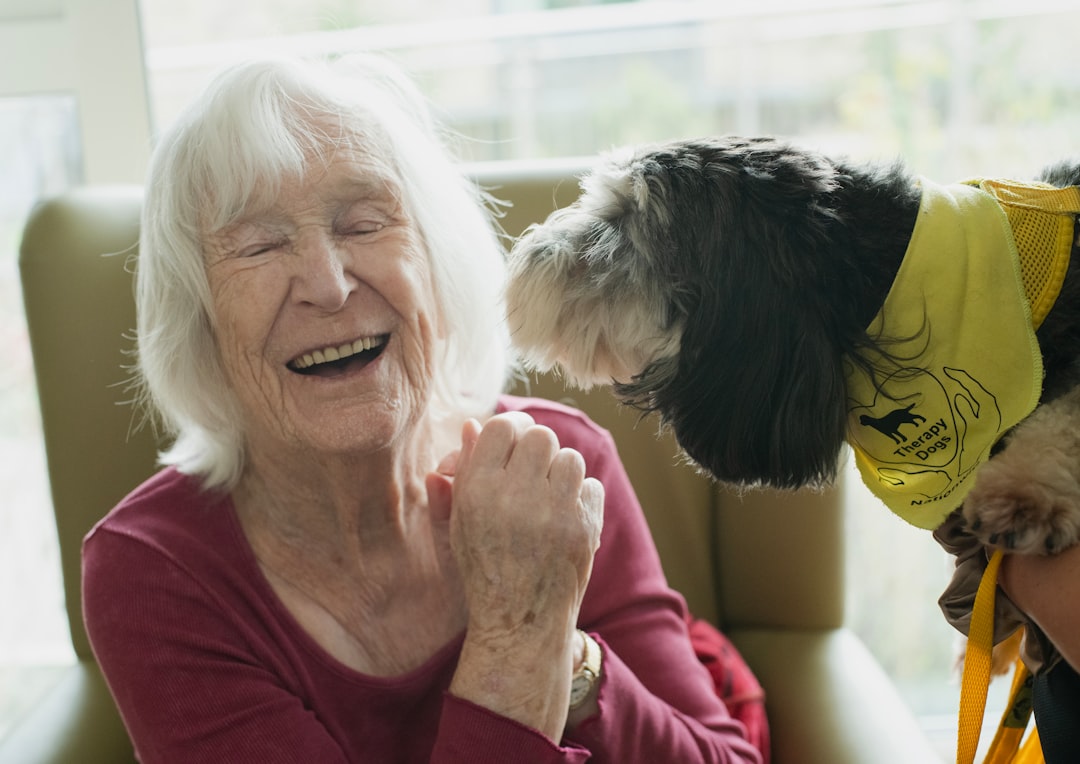
That is the pattern for the next two to four hours. You walk slowly. You let the dog set the pace. Some travelers rush over immediately. Others hang back and make eye contact with you first, silently asking permission. Children crouch down. Elderly passengers sometimes tear up. Nervous fliers tell you things they probably would not say to another human in a terminal.
Your job as handler is to keep the interaction safe, brief and positive. You watch your dog constantly for signs of stress. Lip licking, yawning, ear pinning, tail tucking or a sudden reluctance to engage are all signals to step back, find a quiet spot and let your dog decompress before continuing. Dog welfare is not secondary to the mission. It is the mission. A stressed dog cannot do therapeutic work.
Most handlers aim for interactions of one to three minutes each. Longer visits can happen organically, especially with a traveler who is genuinely struggling, but the dog's comfort level always dictates the length. If your dog is done, you move on.
At the end of your shift you log your visit hours, note any unusual situations and check out with the coordinator. Many programs ask handlers to track visit data for program reporting purposes. That documentation feeds into the airport's evaluation of whether to continue and expand the program.
What Handlers Say About the Work
Handlers who do airport visits consistently describe the experience as different from any other therapy setting. The unpredictability is higher. The emotional range of people you encounter is wider. And the gratitude travelers express is often more intense because they are already in a vulnerable state.
Experienced handlers offer a few consistent pieces of advice for those just starting out.
Wear comfortable shoes. You will walk significantly more than you expect, and the terminal floors are unforgiving. Plan for two to four miles of slow-paced walking in a typical shift.
Bring water for your dog. Airports are temperature-controlled but can feel dry and warm. Collapsible bowls are easy to carry and dogs need regular hydration during active shifts.
Know your dog's limit before you hit it. The handlers who last in airport programs are the ones who pull back before their dogs show stress, not after. Learn your dog's early warning signals during lower-stakes visits first.
Be ready to answer questions about therapy dogs vs. service dogs. Airport staff and security personnel will ask. Travelers will ask. Know the distinction clearly and be prepared to explain it politely in thirty seconds or less.
Stay neutral in emotional conversations. Travelers sometimes share deeply personal things during an interaction. Your role is warmth and presence, not counseling. Acknowledge what they share, stay kind and let the dog do the work.
How to Get Started Today
If airport therapy dog work sounds like the right fit for you and your dog, the path forward is straightforward. Start with certification through a nationally recognized organization. Build your visit hours in lower-complexity environments like libraries, schools or senior living facilities first. Then research airport programs in your area and apply when your team is ready.
At TheraPetic® Healthcare Provider Group, a 501(c)(3) nonprofit, our mission is to support access to animal-assisted care and to help handlers navigate the documentation and training pathways that make that work possible. We are committed to raising standards for both human and animal wellbeing across every therapy setting.
For handlers navigating the documentation side of support and therapy animal work, our team at TheraPetic® is here to help. Reach us at help@mypsd.org or call (800) 851-4390 with questions. You can also begin the process online at go.mypsd.org.
Airport programs are selective for good reason. The environment is demanding, the exposure is enormous and the stakes for dog welfare are high. But for the right team, a certified handler and a calm, people-loving dog, there may be no more powerful place to do therapy work. Thousands of travelers pass through a single terminal on a busy day. Your dog can reach every single one of them.
Written By
Ryan Gaughan, BA, CSDT #6202 , Executive Director
TheraPetic® Healthcare Provider Group • About • LinkedIn • ryanjgaughan.com
Clinically Reviewed By
Dr. Patrick Fisher, PhD, NCC , Founder & Clinical Director • The Service Animal Expert™
Editorial Review
This article was reviewed by Dr. Patrick Fisher, PhD, NCC on September 12, 2026 for accuracy, currency, and clarity. Content is updated when laws or guidance change.