
Why Elderly Populations Benefit From Therapy Dog Visits
Loneliness is one of the most serious health challenges facing older adults in nursing homes and assisted living communities. Many residents go days without meaningful touch or spontaneous joy. A therapy dog visit can change that in minutes.
The connection between humans and animals is powerful at any age. For elderly residents, that connection can reduce anxiety, lower blood pressure, and encourage residents to speak and engage who might otherwise stay quiet. Our Licensed Clinical Doctors at TheraPetic® Healthcare Provider Group have observed these outcomes directly when working with handler teams who serve senior care settings.
Therapy dog visits are not a replacement for medical care. They are a proven complement to it. Facilities from small assisted living homes to large skilled nursing centers actively seek qualified volunteer handler teams because the benefits are real and the resident response is immediate.
Certification Pathways for Facility Visits
Before your dog can set a paw inside a nursing home, you need to meet specific standards. Most facilities require handlers and dogs to be evaluated and registered through a recognized national organization. Three of the most widely accepted programs are the American Kennel Club (AKC) Therapy Dog program, Therapy Dogs International (TDI) and Pet Partners.
The AKC Therapy Dog title requires your dog to have passed the AKC Canine Good Citizen (CGC) test and have completed a minimum number of verified visits through an AKC-recognized therapy dog organization. TDI uses its own evaluator network and requires dogs to pass a temperament and obedience evaluation. Pet Partners is unique in that it evaluates the handler as well as the dog, using a team evaluation model that many senior care facilities specifically request.
Each program has different renewal timelines, insurance structures and documentation requirements. Learn more about therapy dog certification standards before choosing a program so you can match your goals to the right pathway.
Senior care facilities often require proof of insurance as part of their vendor or volunteer credentialing process. Most of the major organizations listed above provide liability insurance to registered handler teams. Confirm coverage details with your chosen program before your first visit.
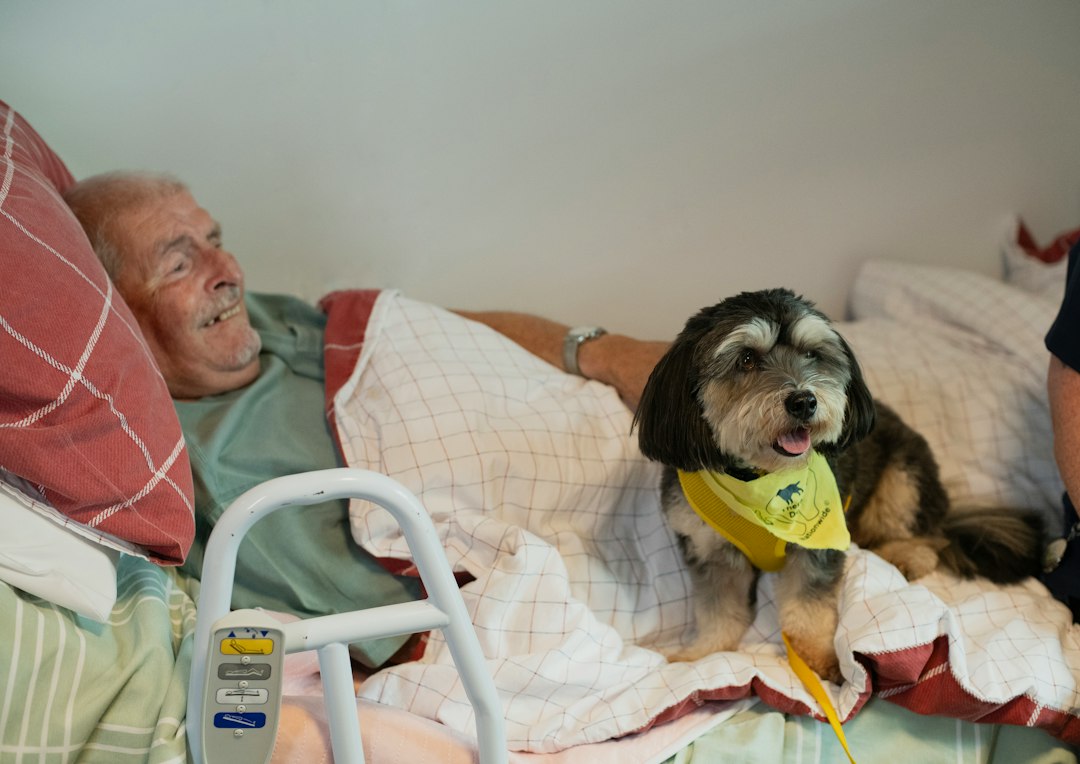
Working With Dementia Patients
Visits with residents living with dementia require a specific mindset. You are not there to correct confusion or hold a conversation. You are there to offer a calm, warm, non-judgmental presence.
Residents with dementia may not remember your name or your dog's name from visit to visit. That does not mean the visit lacks value. In fact, many dementia care specialists and facility activity directors report that residents who rarely respond to staff will reach out to pet a dog. The sensory experience of touch, warmth and the dog's calm energy can reach people in ways that words cannot.
Practical steps for dementia visits include always approaching from the front so you do not startle the resident. Speak slowly and in short sentences. Use the dog's name often and keep your tone warm and steady. Let the resident set the pace. If they pull back, the dog steps back. If they lean forward, you can gently guide the dog closer.
Watch for signs of agitation. Some residents with advanced dementia may become frightened or overstimulated. A well-trained therapy dog will naturally sense tension and may back away on its own. That is a good sign your dog is reading the room correctly. Honor that signal and move on without making the moment feel like a failure.
Never leave a resident alone with your dog, even briefly. You are the handler and the responsible party at all times.
Wheelchair Navigation and Physical Safety
Many nursing home residents use wheelchairs, walkers or are seated in bed during visits. This changes the physical dynamics of every interaction. Your dog needs to be comfortable working at different heights and in tight spaces.
Wheel-level approach is a core skill. Your dog should be able to stand calmly beside a wheelchair while a resident reaches down to pet them without jumping up or backing away from the wheels. Practice this at home using a folding chair or ask your evaluating organization if they include wheelchair scenarios in their assessment. Pet Partners explicitly includes this in their team evaluation.
Hallways in nursing homes and assisted living facilities are often narrow and busy. Meal carts, staff, other residents and medical equipment all share the same space. Your dog must heel reliably and not pull toward food smells or other distractions. This is not the environment for a dog that is still mastering loose-leash walking.
If a resident is in bed, do not lift your dog onto the bed without explicit permission from both the resident and facility staff. Some facilities prohibit this outright due to fall risk and linens contamination policies. Always ask before you act.
Infection Control Standards in Senior Care Facilities
Elderly residents often have compromised immune systems. Infection control is not a formality in nursing homes. It is a serious clinical priority. As a volunteer handler, you carry responsibility for maintaining those standards on every visit.
Facilities regulated under federal guidelines administered by the Centers for Medicare and Medicaid Services (CMS) are required to follow specific infection prevention and control standards. CMS nursing home standards outline what facilities must do to protect residents. Volunteer programs must align with those standards to gain and keep facility access.
Common infection control requirements for therapy dog visits include proof of a recent veterinary wellness exam, current vaccinations (rabies, distemper, bordetella at minimum) and documentation of flea and tick prevention. Some facilities also require a fecal exam completed within a specific window of time before the visit.
Your dog must be visibly clean on the day of every visit. That means bathed within 24 hours, nails trimmed short and ears clean. No strong grooming scents as many elderly residents have respiratory sensitivities. A clean, unscented dog is a safe dog in this environment.
Wash your own hands before and after each resident interaction. Many facilities will provide hand sanitizer stations along your visit route. Use them. If your dog is ill, cancel the visit. If you are ill, cancel the visit. There is no exception to this rule when you are working with a vulnerable population.
Emotional Boundaries for Handlers
This is the part of nursing home volunteer work that no certification exam fully prepares you for. You will witness grief. You will visit a resident one week and learn the next week that they have passed away. You will sit with people who are scared, lonely or in pain. You will carry that with you when you leave.
Experienced handlers learn to build what many call a warm boundary. You are fully present during the visit. You are genuinely moved by the connections you witness. And you also have a practice for processing what you carry out of the building. That might be a debrief conversation with a fellow handler, a quiet walk after the visit or a journaling habit. Find what works for you and use it consistently.
The dog also needs decompression time after visits. Therapy work is mentally demanding for animals even when they enjoy it. Watch for signs of stress: yawning, lip licking, turning away or a sudden drop in energy. Build in rest time after every visit. A dog that is pushed past its limits will eventually show it in its behavior and that is not fair to the animal or the residents.
Handlers who are new to senior care settings sometimes feel pressure to stay longer than planned because residents are reluctant to say goodbye. It is kind to be warm about ending a visit. It is also necessary. Stick to your time limits and honor your dog's energy reserves. Consistency over many visits is worth far more than one exhausting session.
Building a Lasting Volunteer Relationship With a Facility
One-time visits have value. Regular, scheduled visits have far more. Residents begin to anticipate your arrival. Staff learn your dog's name and personality. You become part of the community rather than a visitor passing through.
To build that kind of relationship, start by meeting with the facility's activity director before your first visit. Ask about the resident population, any specific units you should know about and what documentation the facility requires. Come prepared with your certification records, proof of insurance and your dog's vet records already organized in a folder.
Offer a consistent schedule from the beginning. Even once a month is better than random availability. Facilities plan their activity calendars weeks in advance. A volunteer they can count on is far more valuable than an enthusiastic but unpredictable one.
Ask for feedback after your first few visits. Activity directors often have detailed knowledge of which residents responded well and which might not be a good fit for future visits. That feedback makes your program better and shows the facility that you are serious about the quality of the work.
As a 501(c)(3) nonprofit healthcare provider, TheraPetic® Healthcare Provider Group supports volunteer handler teams with education resources and clinical guidance so that therapy dog programs in senior care settings meet the highest standards of care and safety.
How to Get Started Today
If you are new to therapy dog work, the first step is an honest assessment of your dog's temperament. Not every dog is suited for facility visits and that is not a reflection of your dog's worth. It is simply a matter of fit. A dog that is calm, friendly with strangers, comfortable with unusual sounds and unbothered by unpredictable movement is a strong candidate.
From there, pursue a CGC evaluation through the AKC as a foundation. Then choose a therapy dog organization that serves your region and schedule a team evaluation. Many evaluators offer preparation sessions that help you understand exactly what the evaluation involves.
Our therapy dog readiness screening can help you think through whether your dog and your schedule are a good match for senior care facility visits before you invest in formal certification. It is a practical first step that many new handlers find clarifying.
Once certified, reach out to nursing homes and assisted living communities in your area directly. Ask for the activity director by name. Most facilities are actively looking for reliable volunteer teams and a polished, prepared introduction will get you in the door faster than you might expect.
The work is meaningful. It is also a commitment. Your dog depends on you to advocate for their wellbeing. The residents depend on you to show up prepared and consistent. When both of those things come together, the visits become something truly special for everyone in the room.
Questions about getting started or finding the right certification pathway? Reach out to TheraPetic® Healthcare Provider Group at help@mypsd.org or call (800) 851-4390. Our team is here to help.
Written By
Ryan Gaughan, BA, CSDT #6202 , Executive Director
TheraPetic® Healthcare Provider Group • About • LinkedIn • ryanjgaughan.com
Clinically Reviewed By
Dr. Patrick Fisher, PhD, NCC , Founder & Clinical Director • The Service Animal Expert™
Editorial Review
This article was reviewed by Dr. Patrick Fisher, PhD, NCC on October 10, 2026 for accuracy, currency, and clarity. Content is updated when laws or guidance change.